
A Letter From…Vienna
by Adam Csabay
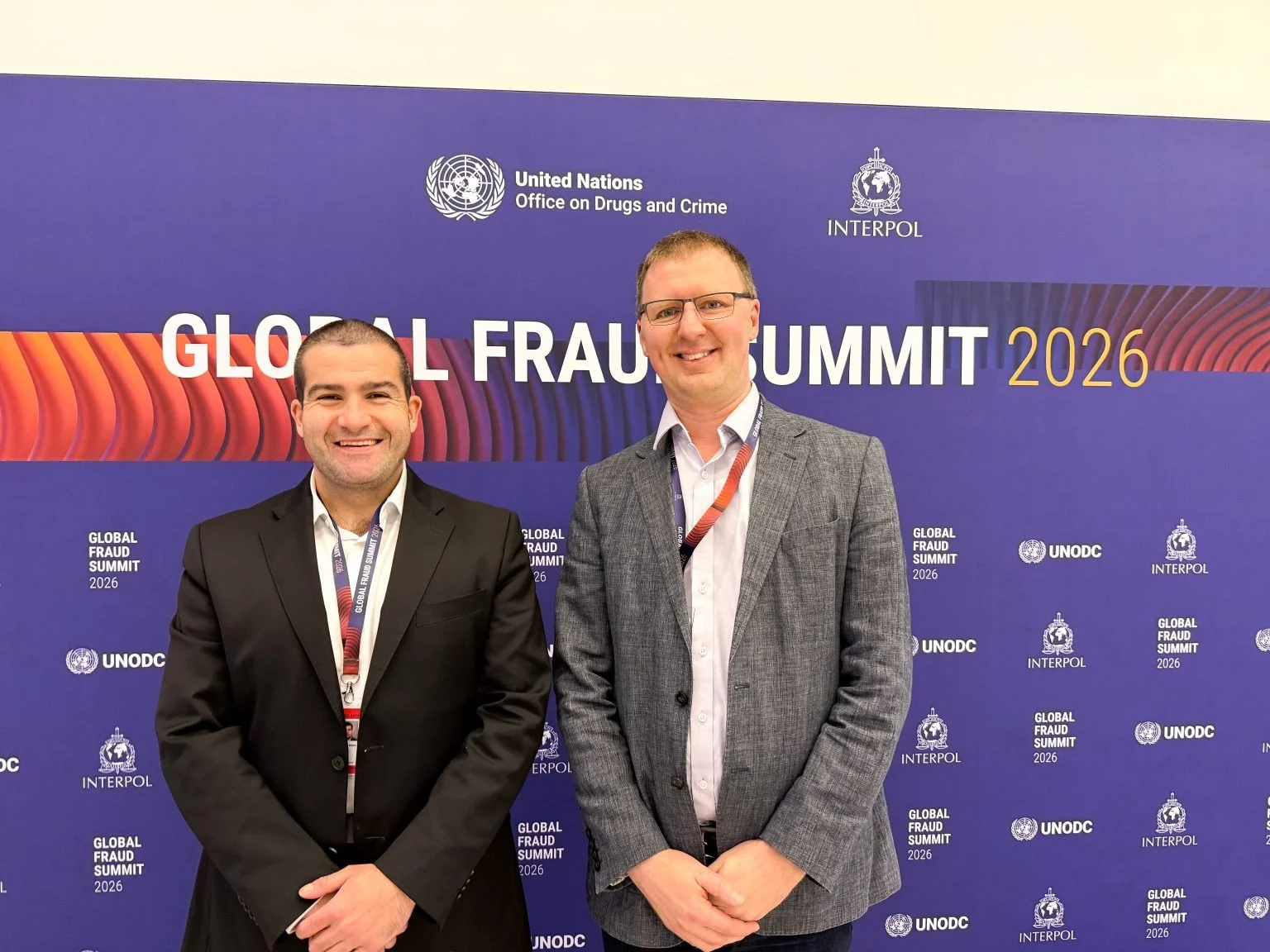
Earlier this month, I had the pleasure of traveling to Vienna for the 2026 Global Fraud Summit. I was joined by a fantastic group of my FNA colleagues—Chief Product & Technology Officer Florian Loecker, Director of National Security Solutions Brandon Smith, and Director of Financial Crime Products Jonathan Draper. Together with peers and partners from government, law enforcement, and the private sector, we tackled one of the most pressing challenges facing the global financial system today: the rise of fraud and financial crime.
Events like these serve as an important reminder to me that while the threat landscape continues to evolve rapidly, so too does our collective determination to address it. Across the discussions, workshops, and informal exchanges I participated in, a clear theme emerged: progress depends not on isolated efforts, but on deep, cross-sector collaboration.
Here are a few of my key takeaways from the summit:
Recognizing Systemic Threats
Throughout my conversations, the focus kept returning to the increasingly sophisticated networks underpinning organized financial crime. We are collectively moving away from viewing fraud as a series of disconnected incidents. There is a growing recognition that these activities are systemic, coordinated, and global in nature—meaning our response must be equally interconnected.
Breaking Down Silos
It was particularly encouraging for me to see how stakeholders are finally moving beyond traditional silos. Representatives from public institutions, financial organizations, and technology providers are actively working together to share intelligence, align strategies, and deploy solutions that can effectively disrupt criminal networks. Establishing centralized initiatives, such as a national fraud portal, is quickly becoming a priority for multi-bank ecosystems worldwide.
Moving from Experimentation to Execution
A major talking point was the role of technology, especially AI and payment data analytics. It is no longer viewed as a distant promise, but as a practical tool already being deployed in high-stakes environments. The narrative has clearly shifted; we’ve stopped asking if these technologies should be used, and are now intensely focused on how they can be implemented responsibly and at scale to deliver measurable impact.
Securing Fast Payments
Given my focus on central banking engagement, safeguarding fast payment systems remains a top priority. As instant payment infrastructures expand globally, they bring undeniable benefits—but also create new vulnerabilities that criminals are quick to exploit. Addressing this requires a combination of advanced analytics, real-time monitoring, and coordinated response mechanisms across institutions and jurisdictions.
What stood out to me most, however, was the shared sense of purpose in the room. Whether I was speaking with law enforcement agencies, central banks, or private sector innovators, there is a growing alignment around the need to take decisive, collective action. The willingness to collaborate—openly and pragmatically—marks a significant step forward in our fight against financial crime.
I am incredibly proud to contribute to these efforts and to support initiatives aimed at making financial systems safer, more resilient, and better equipped to protect consumers. As these partnerships continue to evolve, so too will our ability to stay ahead of emerging threats.
I look forward to building on the momentum we generated in Vienna and continuing these important conversations with partners around the world.
Warm regards,
Adam Csabay,Global Head of Central Banking Engagement, FNA
