News & Commentary
The latest FNA news, insights, research and broadcasts
The implementation of the EU’s Article 75 mandates a crucial shift from siloed reporting to real-time, cross-border information sharing, enabling financial institutions to intercept scams at the speed of modern payment networks. By overcoming governance hurdles and adopting collaborative network intelligence, the industry can proactively expose mule accounts, dramatically increase fund recovery rates, and dismantle the economic viability of financial crime.
Reflecting on a recent summit in Vienna, FNA's Adam Csabay emphasizes the industry's critical shift from siloed fraud prevention to a collaborative, systemic approach against organized financial crime. The dispatch highlights the practical deployment of AI and the urgent need to secure fast payment infrastructures through cross-sector intelligence sharing.
At the Inclusive Fintech Forum in Rwanda, FNA's Kimmo Soramäki highlighted the critical challenge of securing booming real-time payment networks against escalating financial crime without sacrificing speed or financial inclusion. The panel emphasized that overcoming the limitations of siloed compliance requires a shift toward coordinated, network-wide intelligence and collaborative national anti-scam infrastructures.
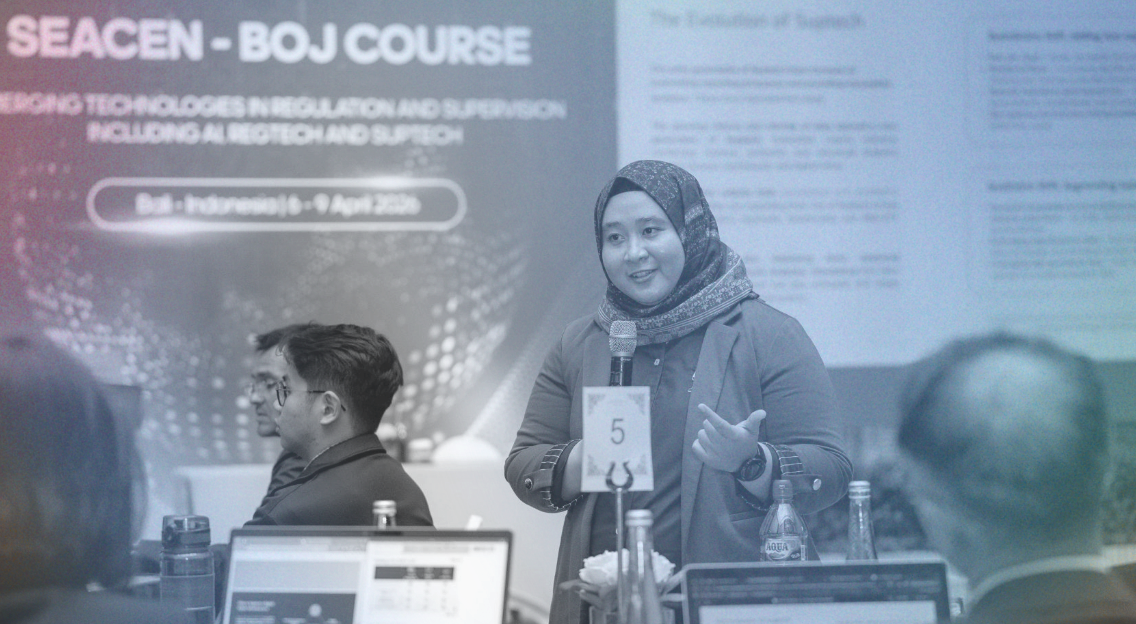
At the 29th Regional Meeting of the Financial Stability Group, FNA advocated for redefining Supervisory Technology (Suptech) from a mere support tool to an essential Digital Public Infrastructure (DPI). By adopting infrastructure-grade standards and leveraging AI-driven analytics, financial authorities can better anticipate disruptions, guide innovation, and proactively safeguard systemic stability.
The weekend geopolitical shocks of early 2026 exposed severe vulnerabilities in legacy financial systems, highlighting the stark contrast between paralyzed traditional markets and continuously operating tokenized assets. To survive this always-on liquidity landscape, institutions must evolve beyond reactive, visibility-only monitoring and adopt autonomous, multi-rail optimization strategies.
As financial crime rapidly shifts from unauthorized breaches to Authorized Push Payment (APP) scams, traditional siloed transaction monitoring systems are failing to detect malicious networks. To counter the speed of real-time payments, the industry must transition to a collaborative, network-first approach leveraging Graph AI to trace mule clusters and create systemic immunity across the entire financial ecosystem.
Browse our recent Broadcasts
Building on previous discussions regarding privacy and EU Article 75, this broadcast explored the practical engineering and infrastructure necessary to establish National Anti-Scam Utilities.
Nick Maxwell and Ian Wachters explore how Article 75 and Secure Multi-Party Computation (MPC) are bridging the gap between cross-border fraud detection and data privacy.
Dirk Bullmann and Keith Bear dismantle the myths of "instant" FX settlement, explaining why liquidity efficiency and robust governance remain the true anchors of post-trade resilience.
Explore by Category: Fraud Portals. | . Liquidity Optimization ..| . Supervisory Intelligence. |. Counter Threat Finance
Explore by Type: News . | . Commentary . | . Awards . | . Broadcast Summary . | . Case Study
The implementation of the EU’s Article 75 mandates a crucial shift from siloed reporting to real-time, cross-border information sharing, enabling financial institutions to intercept scams at the speed of modern payment networks. By overcoming governance hurdles and adopting collaborative network intelligence, the industry can proactively expose mule accounts, dramatically increase fund recovery rates, and dismantle the economic viability of financial crime.
Reflecting on a recent summit in Vienna, FNA's Adam Csabay emphasizes the industry's critical shift from siloed fraud prevention to a collaborative, systemic approach against organized financial crime. The dispatch highlights the practical deployment of AI and the urgent need to secure fast payment infrastructures through cross-sector intelligence sharing.
At the Inclusive Fintech Forum in Rwanda, FNA's Kimmo Soramäki highlighted the critical challenge of securing booming real-time payment networks against escalating financial crime without sacrificing speed or financial inclusion. The panel emphasized that overcoming the limitations of siloed compliance requires a shift toward coordinated, network-wide intelligence and collaborative national anti-scam infrastructures.
At the 29th Regional Meeting of the Financial Stability Group, FNA advocated for redefining Supervisory Technology (Suptech) from a mere support tool to an essential Digital Public Infrastructure (DPI). By adopting infrastructure-grade standards and leveraging AI-driven analytics, financial authorities can better anticipate disruptions, guide innovation, and proactively safeguard systemic stability.
The weekend geopolitical shocks of early 2026 exposed severe vulnerabilities in legacy financial systems, highlighting the stark contrast between paralyzed traditional markets and continuously operating tokenized assets. To survive this always-on liquidity landscape, institutions must evolve beyond reactive, visibility-only monitoring and adopt autonomous, multi-rail optimization strategies.
As financial crime rapidly shifts from unauthorized breaches to Authorized Push Payment (APP) scams, traditional siloed transaction monitoring systems are failing to detect malicious networks. To counter the speed of real-time payments, the industry must transition to a collaborative, network-first approach leveraging Graph AI to trace mule clusters and create systemic immunity across the entire financial ecosystem.
Reflecting on recent industry engagements in the UAE, FNA's Adam Csabay highlights the region's shift toward practical AI applications to combat financial crime and safeguard fast payment systems. The letter underscores the importance of cross-border collaboration and digital transformation in building a safer, more efficient global financial ecosystem.
The integration of digital assets like stablecoins and tokenised deposits has transformed liquidity management from a predictable, single-system process into a fragmented, 24/7 multi-rail challenge. To navigate the unique operational and timing risks of this new financial frontier, treasury teams must move beyond legacy batch systems and adopt real-time intelligence architectures.
With social media now the primary hunting ground for fraudsters, new regulations like the Digital Services Act offer National Anti-Scam Utilities the authority to execute priority takedowns and disrupt scam campaigns before funds are lost.
This article argues for reclassifying Supervisory Technology (Suptech) from simple support tools to Digital Public Infrastructure (DPI), positioning it as a foundational system essential for safeguarding financial stability in a digitized economy.
Article 75 of the new EU AML Regulation establishes a legal framework for private-to-private information sharing, enabling financial institutions to use Privacy-Enhancing Technologies like Multi-Party Computation to disrupt networked financial crime without compromising data privacy.
This report from Toronto details the transition of Intraday Liquidity Optimization (ILO) from concept to live infrastructure, providing Canadian banks with real-time visibility and control as they expand across North American payment rails.
FNA’s Carlos Leon recaps DC Fintech Week 2025, exploring why AI is the "digital nervous system" required to manage the nonlinear risks of our complex, interconnected financial ecosystem.
Dirk Bullmann (CLS) and Keith Bear (Cambridge) debunk the most persistent myths in FX settlement, revealing why "atomic" doesn't always mean efficient and why instant settlement can actually create a liquidity paradox.
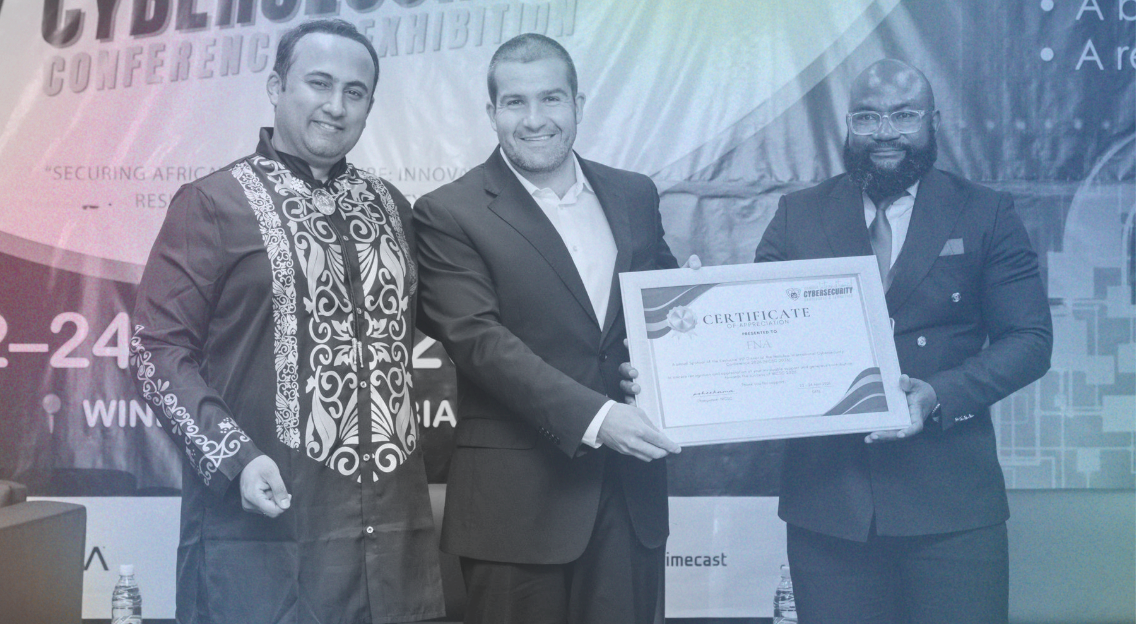
FNA and Proto’s "Trust at Speed" solution wins the 2025 G20 TechSprint, offering a national utility that combines multilingual AI reporting with real-time fund tracing to dismantle industrial-scale scams.
FNA explores why the "speed of progress" must be matched by the "speed of protection," calling for national anti-scam infrastructures to safeguard the economic gains of financial inclusion.
Dr. Kimmo Soramäki (FNA) and Curtis Matlock (Proto) reveal how their G20 TechSprint-winning solution uses multilingual AI and real-time graph analytics to dismantle "industrial-scale" scams.
Mark Cheeseman OBE (PSFA) and Phillip Straley (FNA) examine the UK’s "cross-system" defense against public-sector fraud, highlighting how the Single Network Analytics Platform (SNAP) is uncovering hidden connections in minutes.
FNA and Proto join forces for the G20 TechSprint 2025, presenting "Trust at Speed"—a national utility that integrates multilingual AI reporting with real-time graph analytics to close the "fraud response gap."