
What the Silk Road teaches us about trust in agentic payments
By Dr Kimmo Soramäki, Founder & CEO, FNA
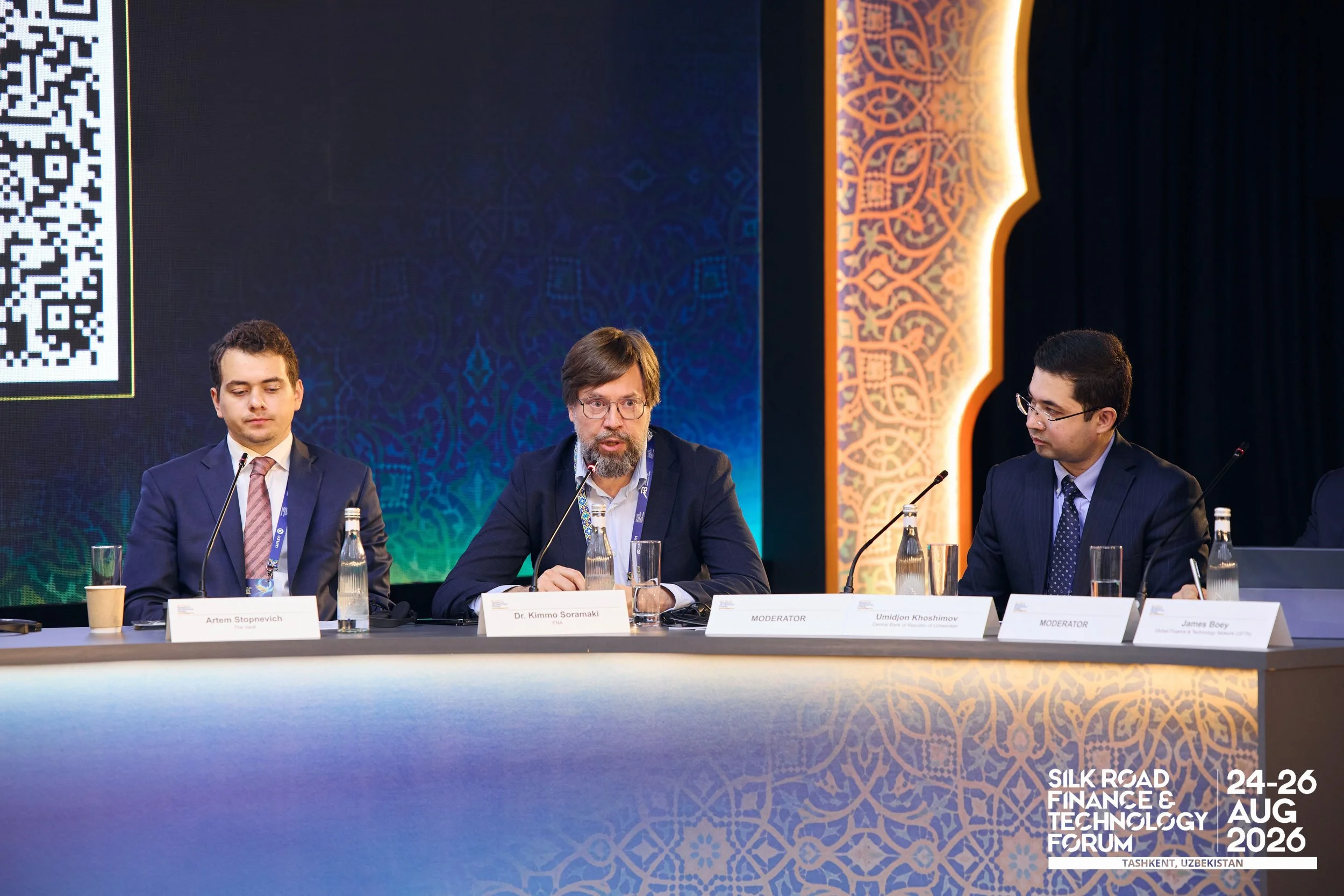
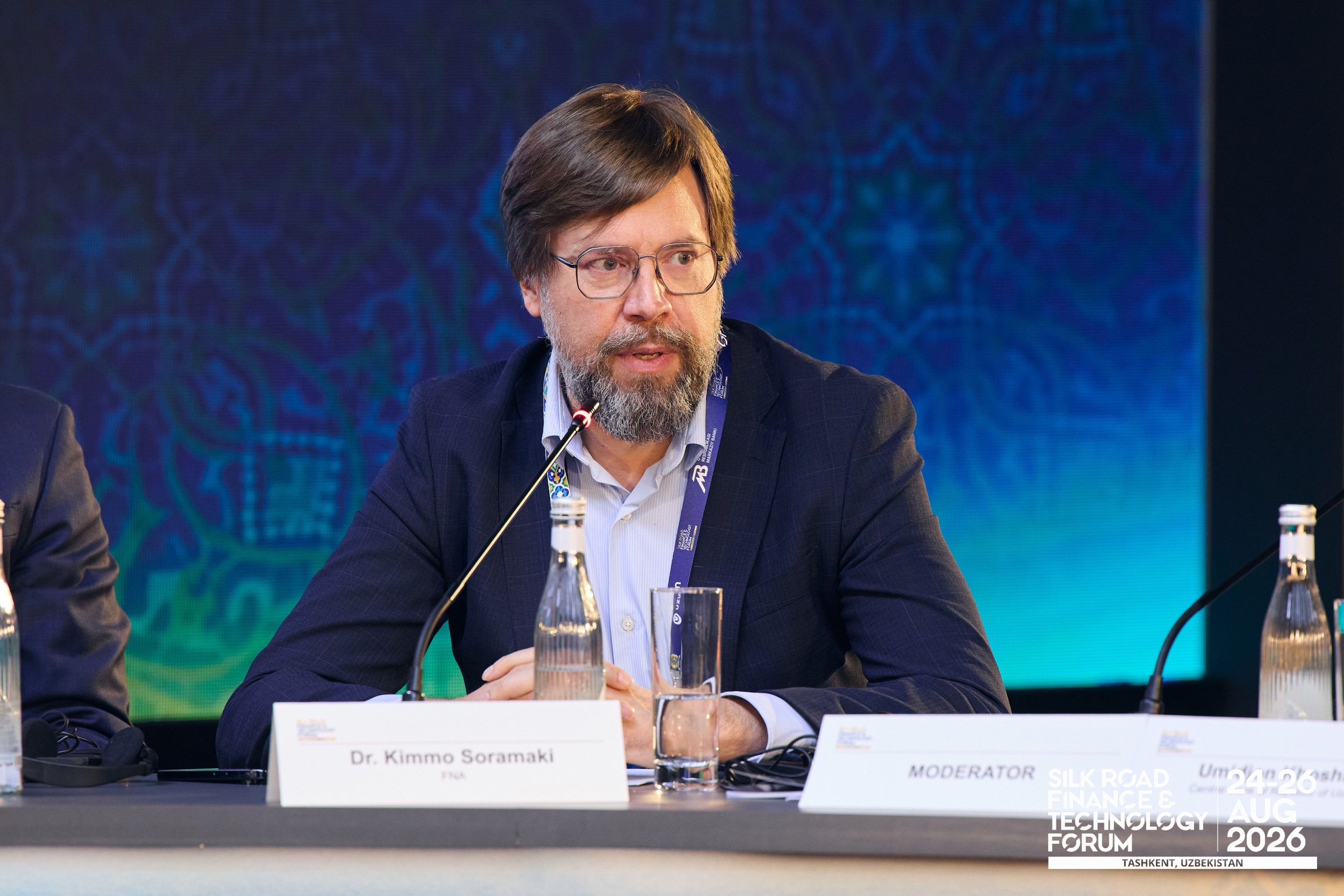
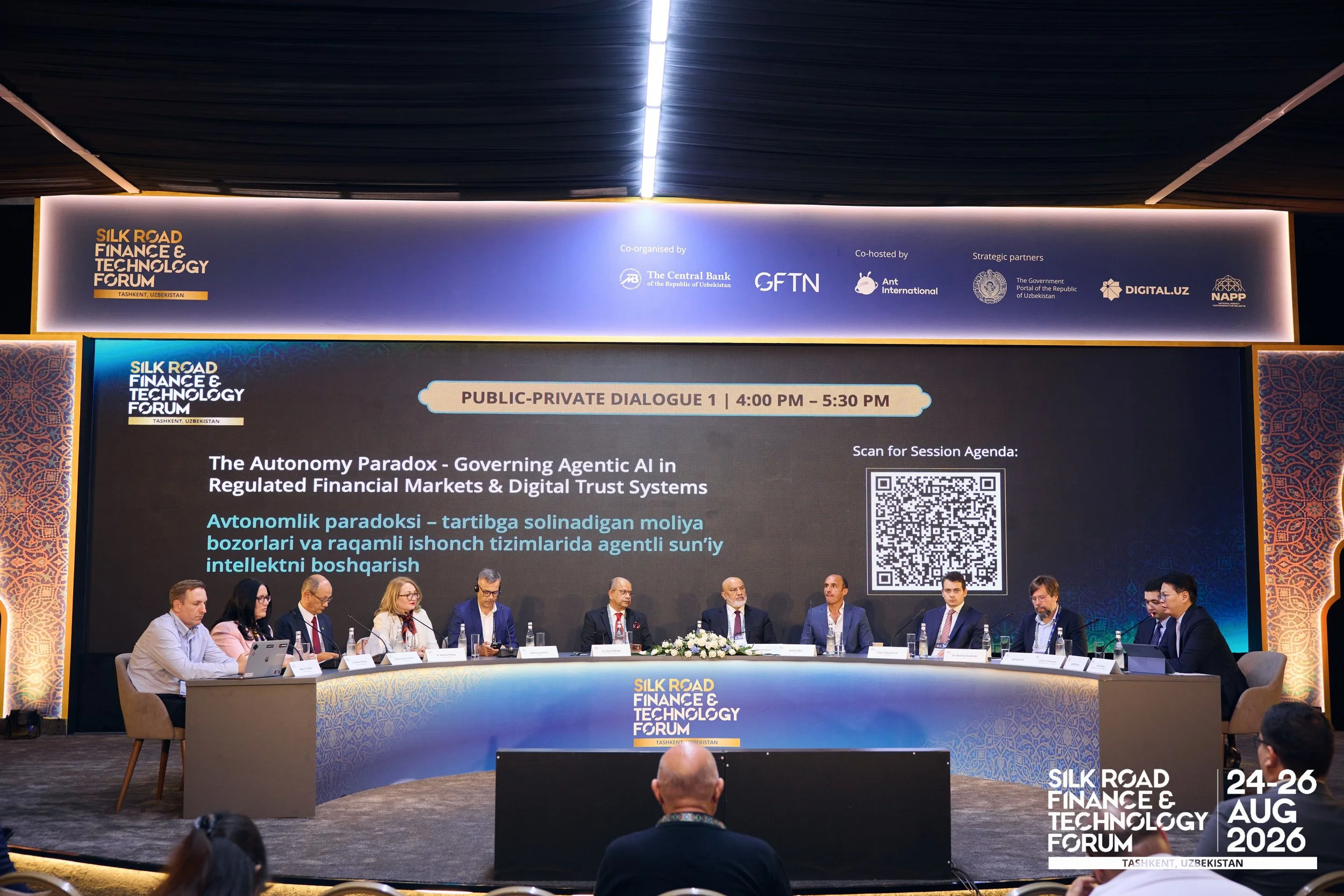
I was recently in Tashkent, speaking at the Silk Road Finance Technology Forum on a roundtable about governing agentic AI in regulated financial markets. It was a fitting setting. The merchants who once crossed this region faced a version of the problem we were discussing: how do strangers, far apart and with no shared court, trust each other enough to trade? The instruments they invented to answer it are more relevant to agentic payments than they might first appear.
My argument on the panel was simple: as software agents begin to pay one another, we should start with the payment layer and build trust into it from the outset, rather than bolting it on after the losses arrive, the way we have done before. My thanks to Umidjon Koshimov of the Central Bank of the Republic of Uzbekistan and James Boey of the Global Finance & Technology Network, who co-moderated the discussion.
Why we want agentic payments in the first place
Start with the benefit. An agent that can pay can act. I would happily hand an agent the job of booking my travel: finding the flights, filling in all the details, giving me back the time. That is the example everyone reaches for.
But I suspect the first wave will not be consumer at all. It will be between companies. As the founder of FNA, I would like my own agents to go out onto the internet, do research, and not be stopped dead by a paywall, and I would gladly give them a budget to buy what they need to finish the task: compute, data, APIs, software and information services. This is machine-consumable commerce, and almost every company wants the same efficiency, getting work done without a person sitting in the middle of every payment. Agent hiring agent, machine paying machine, is where the economics bite first.
The internet was not built for agents
The problem is that every payment method we have today assumes a human is in the loop. Most of the internet is hostile to agents. When I send mine out into it, they spend their time clicking "I am a human", "I am a human", on one site after another, and the moment they reach a payment they hit two-factor authentication designed for a person holding a phone. Checkout, authentication, consent, dispute: the whole online ecosystem presumes a human is present at the moment value moves.
Take that human away, and the assumptions break. There is no human in command when the money moves, no human to attest to a payment or to dispute it afterwards, and an identity model built for customers rather than for software acting on someone's behalf. When both sides of a transaction are agents, there is no consumer to call the bank and start a chargeback, and no merchant on the other end to answer one.
Financial markets already show us what happens when autonomous systems interact at machine speed. Agentic commerce extends that challenge beyond specialised trading environments into everyday economic activity, and to everyone, not only institutions with trading desks.
The Silk Road ran on trust
The Silk Road is the obvious place to look, because it ran on solving exactly this. Its merchants dealt with counterparties they had never met and might never meet again, across great distances and jurisdictions, with no shared court to appeal to and no safe way to carry gold. So they built instruments of trust.
They created the suftaja, an ancestor of the bill of exchange and the letter of credit, so that value could be committed in one city and honoured in another along the route. The word "cheque" itself descends from the Arabic ṣakk, a written order that distant parties agreed to honour. Running alongside these instruments was reputation: the memory of who along the road had dealt honestly before.
Identity, escrow, recourse and reputation are among the oldest instruments in commerce, the machinery of trust between strangers. We do not have to invent trust for the agentic economy. We have to re-issue it, in a form that machines can use.
The lesson from instant payments: build the trust layer in from the outset
Re-issuing it well means learning from the last time we built new rails. Over the past decade, much of my work has been helping countries build inclusive, real-time payment systems. The lesson is that we should have thought about fraud, scams and bad actors before those systems went live, and designed the protections in. Instead, the industry built the rails first and dealt with the criminals afterwards. Much of FNA's work now is helping financial authorities stand up national fraud portals and shared fraud-fighting capabilities, almost all of it overlaid, after the fact, on systems already running. It works, but it is a retrofit, and retrofits are always more costly and less effective than designing for the threat from day one.
This is where markets building their rails now hold an advantage they may not realise. A system with no legacy to unwind can design that trust in from the start. That is a head start on the incumbents.
Agentic payments are a larger step than instant payments were. Instant payments taught us to build fraud protection into the rails; agentic payments ask us to build trust itself into the transaction.
Sinetti: an open protocol for agent-to-agent trust
That is what we have been building at FNA, and I want to be open about it and invite others to join.
We call it Sinetti, Finnish for the wax seal that once made an agreement binding. Sinetti is an open protocol we are designing to let two agents who do not know each other adopt the same rules for a transaction. It is built to verify who an agent is before it transacts; to hold value in escrow until delivery has been proven against criteria both sides agreed in advance (a circuit breaker inside every transaction, rather than a blunt kill switch bolted around the whole market); and to provide recourse, and a durable reputation record, for when there is no human to call.
It is the suftaja's idea, upgraded to what those merchants needed, a letter of credit, with the honourer as code instead of a bank and the merchants as agents instead of people.
A trust layer for the machine economy should be shared, open infrastructure, not something a region rents from a handful of foreign platforms, on currencies and rules it does not control. For any jurisdiction that wants to set its own terms rather than import them, that neutrality is the point.
So my one ask, for regulators, central banks and builders alike: treat trust as infrastructure, build it in the open, and build it from the outset, before the agents outrun the recourse. If that is a problem you are working on too, I would like to hear from you.
Common questions
What are agentic payments? Agentic payments are transactions initiated and completed by software agents acting on behalf of a person or a company, without a human present at the moment value moves. They differ from card-on-file or subscription payments because the agent, not the human, decides what to buy and when.
Why do existing payment rails not work for AI agents? Every mainstream payment method assumes a human is in the loop. Checkout flows, two-factor authentication, consent capture, and dispute resolution are all built around a person holding a phone. When both sides of a transaction are agents, there is no consumer to raise a chargeback and no merchant to answer one.
What is a trust layer for agentic payments? A trust layer supplies the four functions that a human counterparty normally provides: identity, so each side knows who it is dealing with; escrow, so value is held until delivery is proven; recourse, so a failed transaction can be unwound; and reputation, so past behaviour carries forward. These are the oldest instruments in commerce, re-issued in a form machines can use.
What is Sinetti? Sinetti is an open protocol FNA is designing to let two agents who have never met adopt the same rules for a transaction. It verifies an agent's identity before it transacts, holds value in escrow against pre-agreed delivery criteria, and maintains a durable reputation record. The name is Finnish for the wax seal that once made an agreement binding.
What can agentic payments learn from instant payments? Instant payment systems were largely built before fraud and scam protections were designed in, so most fraud-fighting capability has been retrofitted onto live systems. Markets building new rails now can design the protections in from the start, which is cheaper and more effective than a retrofit.
Related reading
Fraud portals — how financial authorities build shared, national fraud-fighting capability
Digital twin — simulating a payment system before the threat arrives, not after
FNA papers — our research on financial networks, payment systems, and systemic risk
Insights — more from the FNA team
