
All News & Insights
Browse the full archive of FNA’s news and commentary
Explore by Category: Fraud Portals. | . Liquidity Optimization ..| . Supervisory Intelligence. |. Counter Threat Finance
Explore by Type: News . | . Commentary . | . Awards . | . Broadcast Summary . | . Case Study

The first users of agentic payments will be simulated agents
On the back of a Point Zero roundtable discussion, Kimmo Soramäki explains why the first users of agentic payments will be simulated agents—and how AI-driven digital twins are transforming intraday liquidity management in RTGS systems.
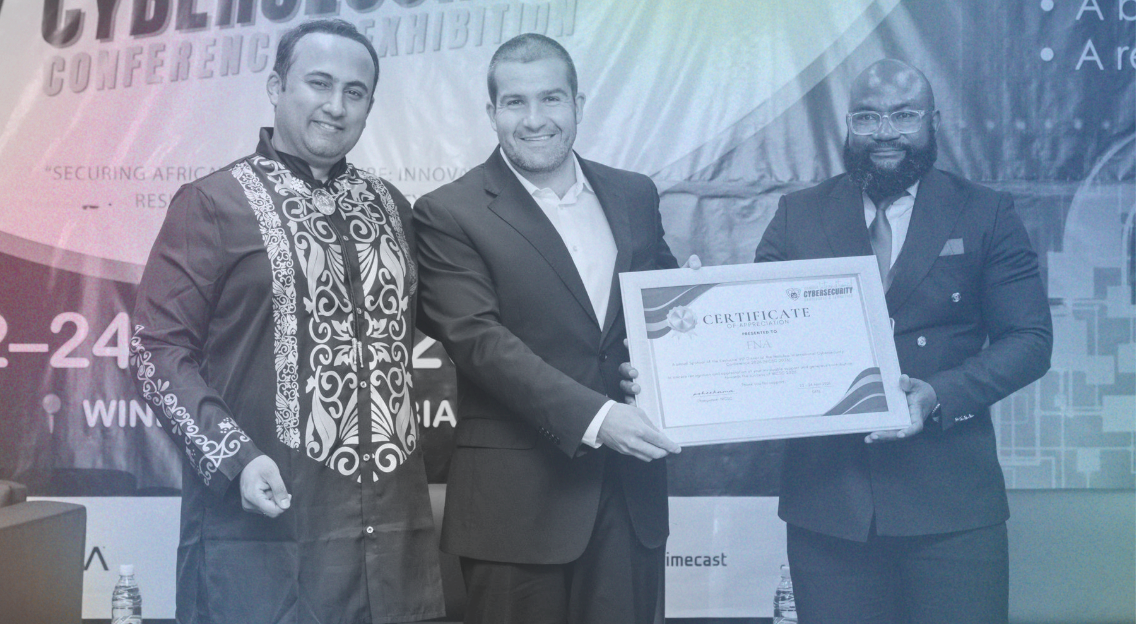
A Letter from…Namibia
How is Namibia is pioneering national anti-scam infrastructure. FNA's Adam Csabay discusses the need for real-time network analytics and shared fraud portals at NICSC.

Fraud and Scams - Go After the Money
While traditional law enforcement focuses on prosecuting criminals, victims of APP fraud prioritize one thing: getting their money back. This article argues that saving those funds requires a fundamental shift toward real-time, cross-institutional infrastructure that operates at the speed of the payment itself.

Balancing Speed and Security: Reconciling AML, Sanctions, and Real-Time Payments
At the Inclusive Fintech Forum in Rwanda, FNA's Kimmo Soramäki highlighted the critical challenge of securing booming real-time payment networks against escalating financial crime without sacrificing speed or financial inclusion. The panel emphasized that overcoming the limitations of siloed compliance requires a shift toward coordinated, network-wide intelligence and collaborative national anti-scam infrastructures.

Fraud vs Scams: The Architectural Shift Required to Protect Real-Time Payments
As financial crime rapidly shifts from unauthorized breaches to Authorized Push Payment (APP) scams, traditional siloed transaction monitoring systems are failing to detect malicious networks. To counter the speed of real-time payments, the industry must transition to a collaborative, network-first approach leveraging Graph AI to trace mule clusters and create systemic immunity across the entire financial ecosystem.

A Letter from…the U.A.E
Reflecting on recent industry engagements in the UAE, FNA's Adam Csabay highlights the region's shift toward practical AI applications to combat financial crime and safeguard fast payment systems. The letter underscores the importance of cross-border collaboration and digital transformation in building a safer, more efficient global financial ecosystem.

From Tools to Infrastructure: Making the Case for Suptech as Digital Public Infrastructure
This article argues for reclassifying Supervisory Technology (Suptech) from simple support tools to Digital Public Infrastructure (DPI), positioning it as a foundational system essential for safeguarding financial stability in a digitized economy.

The Future of Suptech: From Compliance to Infrastructure
We reflect on the evolution of Suptech, predicting a shift toward a new supervisory paradigm where central authorities transition from periodic monitors to real-time systemic enablers through shared utilities, Digital Twins, and fused data intellig

When Compliance Is a Dirty Word: Why More Authorities Are Taking Direct Action on Fraud and Scams
As fraud outpaces traditional compliance, central banks are shifting toward unified national infrastructures that leverage AI and real-time tracing to proactively protect consumers and restore financial system integrity.

Summary Payment Systems Broadcast #22: Synchronising the Future of Cross-Border Payments:
Project Meridian FX demonstrates how a neutral "synchronization operator" can orchestrate atomic, cross-border payments between diverse ledgers, providing a practical and faster alternative to wholesale CBDCs for wholesale FX settlement.

From RTGS Simulation to RTGS Digital Twins – Why are they more powerful?
This article details the strategic shift from traditional, episodic Real-Time Gross Settlement (RTGS) simulations to dynamic, always-on digital twins, which integrate real-time transactional data to continuously guide policy, optimize liquidity, and strengthen the resilience of financial market infrastructures.

What does President Trump’s return to the White House mean for CBDC projects worldwide?
NA’s Carlos Leon analyzes how the ban on CBDCs under the Trump administration shifts the focus toward private-sector innovation—specifically stablecoins and blockchain—to maintain the dollar’s global dominance

FNA Insider: December Edition – FNA’s wraps up 2024
From launching Malaysia’s National Fraud Portal to achieving 30% liquidity savings for global banks, FNA reflects on a landmark 2024 dedicated to financial safety, efficiency, and innovation

A Letter From – Singapore
FNA’s Amanah Ramadiah shares key takeaways from the Singapore Fintech Festival, exploring how AI, Project Nexus, and collaborative frameworks are redefining the future of cross-border payments and financial crime prevention

Simulating the Adoption of a Retail CBDC
FNA researchers publish a new study in the Journal of Economics and Statistics using agent-based modeling to simulate the adoption of a Digital Euro in Spain's retail payment system.

FNA at the Arab Regional Fintech Working Group & Suptech Workshop in Dubai
FNA joins the Arab Monetary Fund and Cambridge Suptech Lab in Dubai to present GraphAI-driven fraud detection and the global rise of National Fraud Portals.
The Next Generation RTGS: Liquidity Saving Mechanisms as an Overlay Service
As legacy RTGS systems age, integrating Liquidity-Saving Mechanisms directly into core central bank ledgers limits agility and increases complexity. By extracting these mechanisms into an independent "LSM Overlay Service," financial institutions can algorithmically resequence payments to save up to 69% in liquidity while enabling faster, modular infrastructure upgrades.
Building Robust Anti-Fraud & Scam Capabilities at the National Level
The shift to instant payments has accelerated complex, cross-bank fraud that siloed bank data cannot detect. By establishing national data-sharing hubs and deploying advanced network analytics, authorities and banks can trace illicit money trails in real time and intercept scams before funds are lost.

The Power of Payments Data
FNA explores three pivotal use cases for payments data—stress testing, liquidity monitoring, and supply chain analytics—to transform 'ordinary financial plumbing' into a powerful tool for global economic stability.
Q&A: FNA’s Carlos León on how digital money can be more efficient and safe
Carlos León explores CBDCs as a digital evolution of fiat money, highlighting their potential to enhance payment efficiency, safety, and financial inclusion across diverse global economies. He emphasizes that FNA’s simulation technology is essential for central banks to navigate complex design trade-offs—such as privacy and liquidity—to ensure a stable transition.