
All News & Insights
Browse the full archive of FNA’s news and commentary
Explore by Category: Fraud Portals. | . Liquidity Optimization ..| . Supervisory Intelligence. |. Counter Threat Finance
Explore by Type: News . | . Commentary . | . Awards . | . Broadcast Summary . | . Case Study

FNA Contributes to the World Economic Forum report on Wholesale CBDCs
FNA’s Carlos León contributes to the World Economic Forum’s latest Insight Report, addressing the critical liquidity demands and risks of transitioning to wholesale CBDCs and atomic settlement.
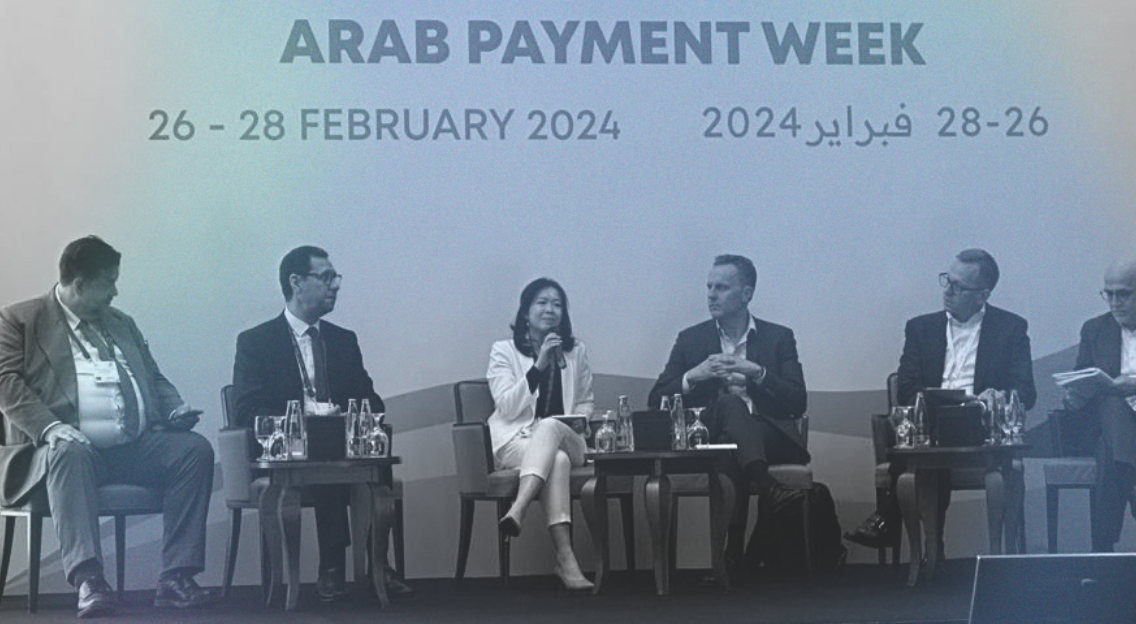
FNA at Arab Payment Week
FNA’s Phillip Straley joins Arab Payment Week in Abu Dhabi to discuss the future of cross-border payments, highlighting the need for national collaboration to fight fraud and drive wholesale liquidity efficiencyration to fight fraud and drive wholesale liquidity efficiency
The Next Generation RTGS: Liquidity Saving Mechanisms as an Overlay Service
As legacy RTGS systems age, integrating Liquidity-Saving Mechanisms directly into core central bank ledgers limits agility and increases complexity. By extracting these mechanisms into an independent "LSM Overlay Service," financial institutions can algorithmically resequence payments to save up to 69% in liquidity while enabling faster, modular infrastructure upgrades.

FNA ILO: “The Lean Six Sigma of payments”
FNA explores how its Intelligent Liquidity Optimization (ILO) solution acts as the ‘Lean Six Sigma of payments,’ applying principles of waste reduction and data-driven efficiency to revolutionize intraday liquidity management.
Building Robust Anti-Fraud & Scam Capabilities at the National Level
The shift to instant payments has accelerated complex, cross-bank fraud that siloed bank data cannot detect. By establishing national data-sharing hubs and deploying advanced network analytics, authorities and banks can trace illicit money trails in real time and intercept scams before funds are lost.
Liquidity-Saving Mechanisms in Trade Credit Networks: Optimising Corporate Liquidity
Trade credit drives corporate supply chains but exposes firms to cascading late-payment and default risks. By applying interbank Liquidity-Saving Mechanisms (LSMs) to corporate networks, a new Financial Market Infrastructure could drastically reduce liquidity requirements, clear gridlocks, and provide unprecedented visibility into supply chain health.
Molecular Settlement: Making Atomic Settlement Work in a Positive Interest Rate Environment
While "atomic settlement" promises instantaneous and simultaneous asset transfers, it creates unsustainable liquidity costs for financial institutions in a positive interest rate environment. By deploying smart algorithms to group individual trades into efficient "molecules," institutions can achieve near-instant settlement without sacrificing critical liquidity savings.

Payment Threading and How it Accelerates Throughput in Payment Systems
FNA’s Chief Data Scientist Samantha Cook introduces Payment Threading: a patented solution that uses network community detection to multiply payment system capacity without requiring a total architectural overhaul.

What will it take for CBDCs to be successful?
FNA’s Carlos León speaks with The Banker on how CBDC simulation and digital twins allow central banks to model economic impacts and iterate designs for optimal financial stability.

CBDCs: Should the End-User Shape the Future of Money?
FNA’s Carlos León advocates for a more user-centric approach when designing Central Bank Digital Currencies (CBDCs) in this article featured by the AGDM Academy Research Centre as part of its Insights Series.

Attractive Design Options combined with Policies and Limits are Key to rCBDC Adoption.
FNA’s latest research utilizes a digital twin of Spain’s payment ecosystem to identify the 'sweet spot' for retail CBDC adoption through simulated design options and stimulus policies.

Exploring Purpose Bound Money: Innovative Use Cases for Central Bank Digital Currencies in Fintech
FNA Founder and CEO Dr Kimmo Soramäki joined Startuprad.io’s podcast to explore the various use cases and mechanisms to drive user adoption and the success of CBDCs.

BIS finds network analysis improves AML efforts
FNA’s Will Towning examines BIS Project Aurora’s findings, which reveal that graph-based machine learning doubles the detection of money laundering activity while slashing false positives by up to 85%.
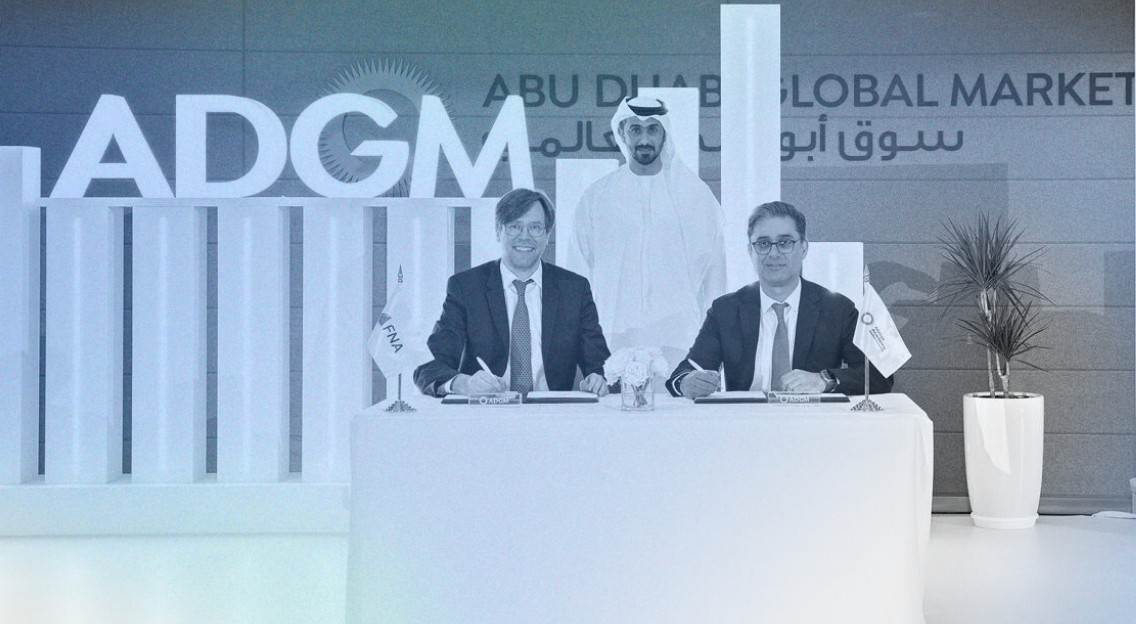
FNA and ADGM Academy Partner to Drive Digital Transformation in the UAE’s Financial Sector
FNA and the ADGM Academy Research Centre enter a strategic partnership to drive UAE financial innovation through joint R&D, advanced network analytics, and digital twin technology.
Digital Operational Resilience Act (DORA): Addressing an Old New Network Problem
The Digital Operational Resilience Act (DORA) expands European financial regulation to explicitly cover third-party ICT and cloud service providers. By mapping these critical technological interdependencies, regulators and institutions can better visualize, simulate, and mitigate the severe systemic risks posed by cloud concentration.
PRESS RELEASE: BPNG Partners with FNA to Monitor Intraday Liquidity
The Bank of Papua New Guinea partners with FNA to deploy advanced network analytics and stress-testing simulations for real-time intraday liquidity monitoring and systemic risk oversight.

Every Financial System Needs a Digital Twin
FNA explains why every financial system needs a Digital Twin, offering a hyper-realistic virtual environment to de-risk modernization, optimize liquidity, and stress-test without real-world disruption.

The Power of Payments Data
In part two of 'The Power of Payments Data,' FNA explores how graph-based anomaly detection at the system level provides the accuracy, resilience, and agility needed to dismantle sophisticated global money laundering networks.

How rCBDC Gets Done: Why Learning by Simulation is Critical for rCBDC Projects
Inspired by 'How Big Things Get Done,' FNA explores how its rCBDC Simulator applies the principles of modularity and simulation to de-risk one of the most complex projects in modern finance.

What a UK CBDC means for the Financial Ecosystem
Inspired by 'How Big Things Get Done,' FNA explores how its rCBDC Simulator applies the principles of modularity and simulation to de-risk one of the most complex projects in modern finance.