
By Saiesha Pitroda
Most days, the closest I get to the tropics is the slightly sad-looking palm in the corner of my spare room. A couple of weeks ago, I swapped it for the real thing as I headed to Miami for my first Sibos. Miami, in late September, however, didn’t quite live up to the vision in my head with the week bringing a lot more rain than expected, and on more than one afternoon the conference doubled as a shelter from the storm. I didn’t come home with a tan, but I did come home with something more useful: a clearer picture of the themes shaping our clients’ world, and why they matter to the people who deal with them every day.

Every new rail is another pool of liquidity
Sibos kicked off with Jane Fraser, Chair and CEO of Citi, delivering the opening keynote. Her message was that payments are becoming faster, digital, programmable, and always on, and it became the refrain of the week, repeated in one form or another over the next four days. Swift’s own session took the idea a step further, describing a near-future where traditional and tokenised money travel over many different networks, with customers only ever seeing payments arrive or leave their accounts.
Michelle Neal of Fnality put it more sharply on a panel asking whether traditional finance can fix the customer experience before decentralised finance wins the race. She described it as “friction versus function”. Some steps in a payment are pure friction, and technology should remove them. Others do real work, such as managing liquidity, netting, and ensuring settlement finality, and that work doesn’t disappear just because the money has been tokenised.
It was a point that came up time and time again as I sat in on client meetings with the team, with global banks often asking for the same thing: a single view of their money, digital and fiat, across every rail they use. Each new rail splits liquidity into another pool, and every stablecoin network or tokenised deposit platform becomes one more place for cash to sit idle. Someone has to keep an eye on all of it, which is the problem FNA’s Intelligent Liquidity Optimization (ILO) was built to solve.
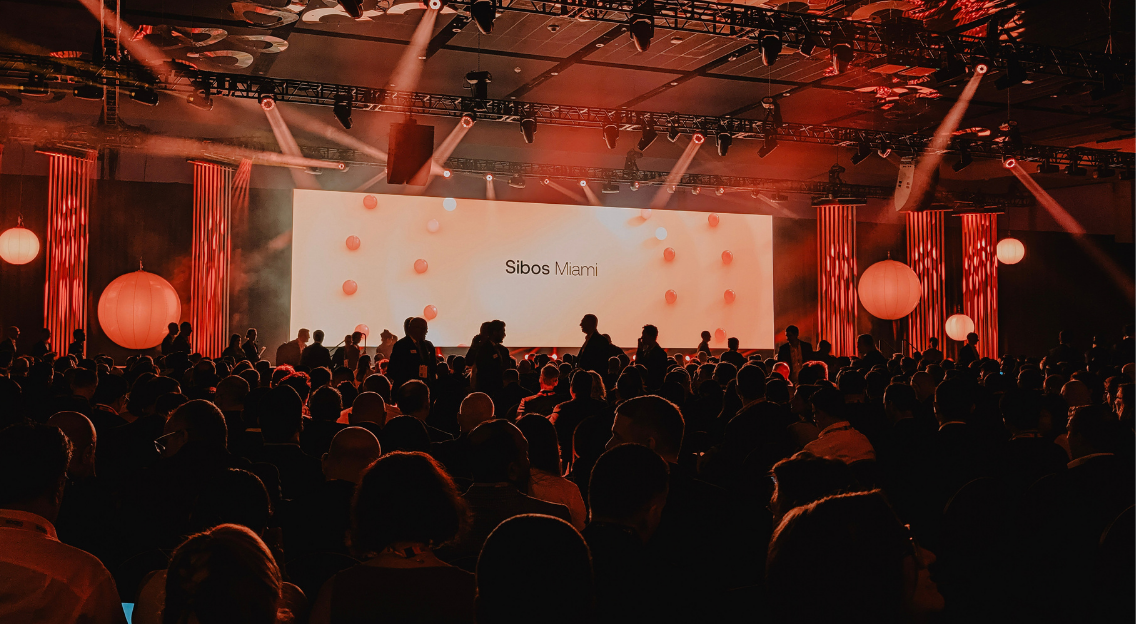
Sibos Opening Keynote
Safer doesn’t have to mean slower
The session that followed me home asked whether safer payments have to be slower. My own answer is that protecting payment systems from fraudsters means using tools that move at the same pace as the criminals, who aren’t known for their patience. The panel described it as a conveyor belt: instead of slowing the whole line, you lift off the one suspicious parcel. The hard part has always been knowing which parcel. Criminals exploit the gaps in visibility between banks, so a payment that looks perfectly normal inside one bank can look obviously wrong once you follow the money to its next stop, or look at the payment network as a whole. That’s the view FNA’s National Anti-Scam Utility gives central banks, payment system operators, financial intelligence units, and law enforcement. It traces funds across the network in real time, and flags unusual payments, so the money can be frozen before criminals have a chance to move it out of the banking system.
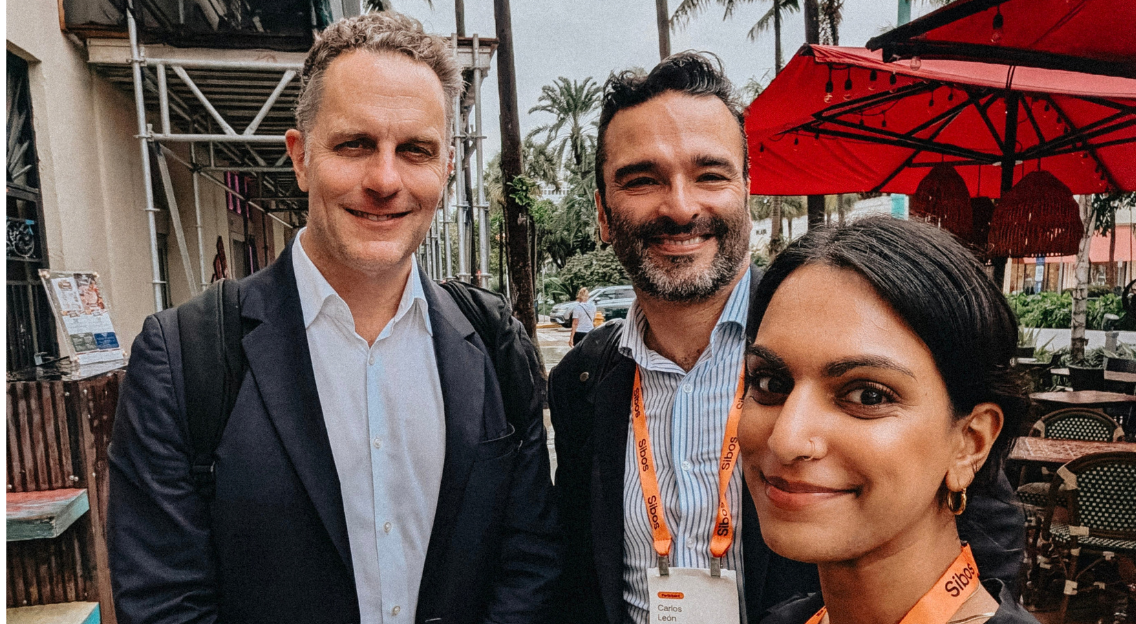
FNA Team at Sibos
AI and the importance of keeping a human in the loop
Most of us have watched artificial intelligence (AI) change how we work in a remarkably short space of time, so it came as no surprise that it was a huge topic at this year’s Sibos. Amid all the talk of agentic payments, writer and scholar Michael Sacasas offered a gentle reminder that speed isn’t always a virtue. He told the story of Stanislav Petrov, the Soviet officer who in 1983 chose to pause instead of passing on a false missile alert, and very probably prevented a nuclear exchange. His point was that the pause is where judgement lives, and if we automate it away, we end up with decisions that no one owns.
The point stayed with me because it describes what supervisors keep asking us for. Few of them want a model that decides on their behalf. They want the network laid out in front of them, the counterparties, the exposures, and the anomaly, in a form they can interrogate and defend to a board afterwards. That is the principle behind FNA's supervisory technology: the analytics synthesize millions of transactions to a signal worth a supervisor's attention, and the reasoning stays visible the whole way through. The pause Sacasas described is where supervision happens, and the job of good suptech is to protect it.

Sibos Miami Puppy Lounge
The week beyond Sibos
The surprise star of Sibos was the puppy lounge, where five minutes with a dalmatian pup proved a better antidote to a conference this size than any amount of free coffee. Sadly, FNA’s resident in Miami, Carlos León, couldn’t be persuaded to adopt one as our official mascot.
The evenings were just as memorable, from a fantastic dinner at Los Fuegos with our friends to EY’s evening at The Setai and a cigar-rolling session with Red Hat, which I left with a cigar and no immediate plans to change careers. I also squeezed in Wynwood’s murals and Little Havana’s coffee windows before a flight home that was, inevitably, delayed. In keeping with tradition, I added a couple of mosquito bites to my growing collection of foreign antihistamines.
Getting away from the laptop to see FNA in action has been hugely valuable, so I’ll be spending the next eleven months or so pestering Kimmo for a ticket to Singapore. If I make it to Sibos 2027, I’ll be packing a jumper — the air conditioning had me wishing I’d brought my big coat.
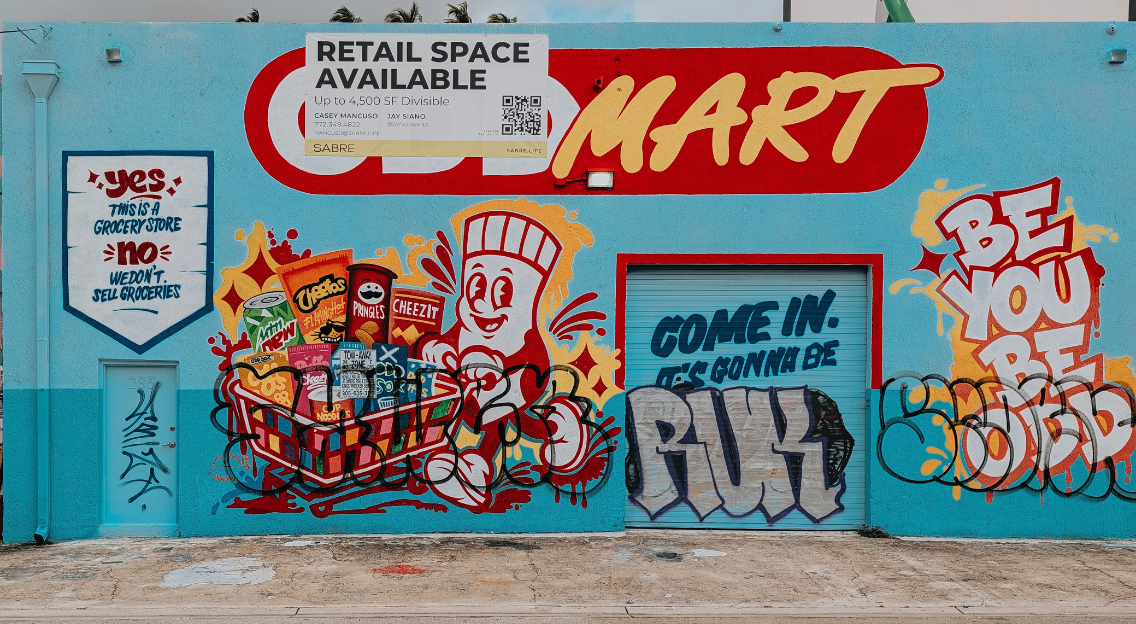
Wynnwood Miami
Best,
Saiesha, Digital Marketing Manager
