
FNA’s take on five themes from the Sibos 2026 opening keynote
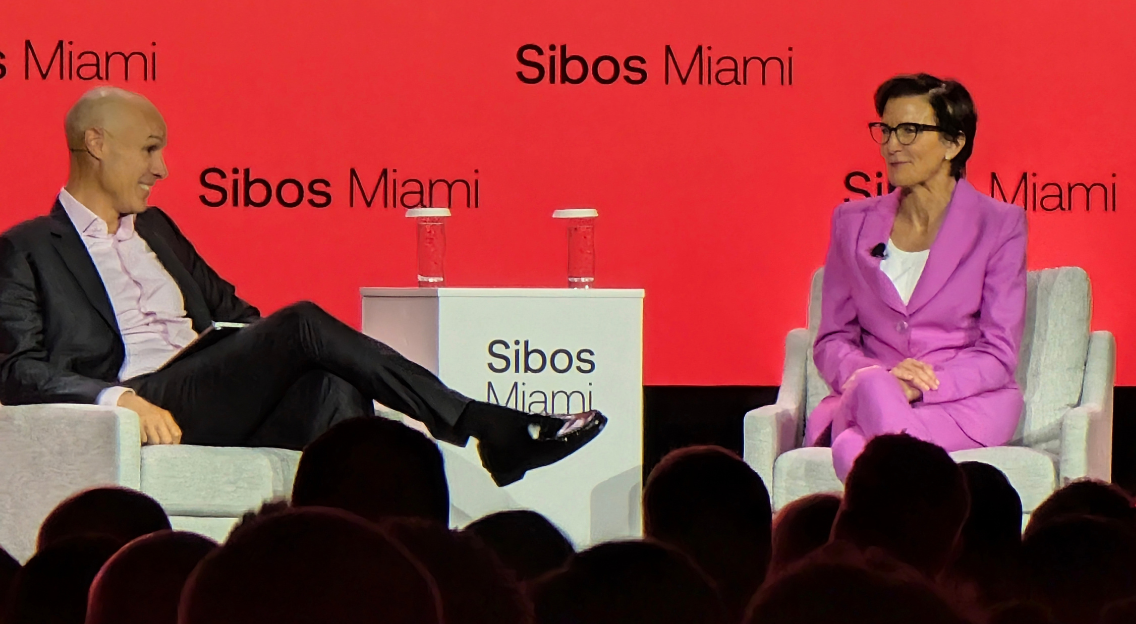
Sibos 2026 opened on 28 September with a keynote from Jane Fraser, DBE, Chair and CEO of Citi, Dan Katz from the IMF, and Swift's Graeme Munro and Javier Pérex-Tasso. Here are the five themes we took away, and what we think each means in practice.
Modernising infrastructure and data.
The industry has two goals: get the most from the infrastructure it already trusts, and build what comes next. ISO 20022 is the foundation, and its data has to flow end-to-end across the payment lifecycle to support new services. Cross-border payments are also moving to always-on infrastructure.
Our view: ISO 20022 is also a data upgrade. Each message carries structured detail on who is paying whom and why, which gives banks, operators, and supervisors far more to analyse for liquidity, risk, and fraud. Always-on settlement adds urgency. The end-of-day window that once absorbed errors and funding gaps is closing, so liquidity has to be managed continuously, not from daily snapshots.
AI and autonomous agents.
Today's financial systems were not built for economic activity driven by autonomous artificial intelligence (AI) agents, and they will need re-engineering. The benefits are large: less friction, better transaction quality, lower barriers to entry and more competition. Agents can automate complex transactions, speed up processing, adjust timing and liquidity as conditions change, and make compliance and regulatory reporting cheaper.
Our view: Agents will make payment decisions faster than people can review them. The controls have to be in place before the payment: who the agent is, what it may spend, and where a dispute goes. Every decision also needs a record a regulator can inspect. Raha is FNA's open payment scheme for AI agents, setting those rules for payments in euro. Sinetti is our open protocol for agent identity, recourse and reputation. Both are in testing and handle no real funds.
Tokenisation and programmability.
Cross-border payments are becoming more digital, programmable and interoperable. The keynote pointed to programmable tokenised assets, automated settlement and shared tokenised deposits as ways to simplify liquidity and settlement.
Our view: Each new rail adds another pool of liquidity. Banks need one view across real-time gross settlement (RTGS) systems, instant payments and tokenised assets, or faster settlement will simply mean larger buffers. Intelligent Liquidity Optimization gives treasury teams that view across traditional and digital rails, in real time.
Regulation and central banks.
Policymakers need frameworks that support innovation without stifling it. Faster payments and central bank digital currencies (CBDCs) put new pressure on liquidity. New rules are also needed for the risks AI brings and for the cybersecurity threat from quantum computing.
Our view: Periodic reports will not be enough. Supervisors will need forward-looking tools that simulate policy changes and flag contagion early. Supervisory Intelligence uses graph analytics and digital twins to give central banks that foresight.
Is globalisation dead?
No. Global trade is being rebooted and reconfigured. Trade may be declining in some traditional corridors, but fast growth in China, Africa, and Latin America is offsetting that and opening new ones.
Our view: New corridors bring new counterparties, new liquidity patterns, and new routes for fraud. Risk models built on old trade flows will need updating.
Attending Sibos this week? Get in touch to meet the FNA team and talk through what these themes mean for your institution.
